Listen to this article
Audio version available
Content creation has become one of the most time-consuming challenges for modern businesses, requiring constant output across blogs, social media, videos, and marketing materials. Artificial intelligence has emerged as a powerful solution, enabling creators to produce high-quality content in a fraction of the time traditional methods require. Today's AI tools can generate written articles, design visuals, create videos, and even develop entire marketing campaigns with minimal human input. This transformation isn't about replacing human creativity but amplifying it, allowing content teams to focus on strategy and refinement while AI handles the heavy lifting. By the end of this guide, you'll understand exactly how to integrate AI into your content workflow and scale your production capabilities.
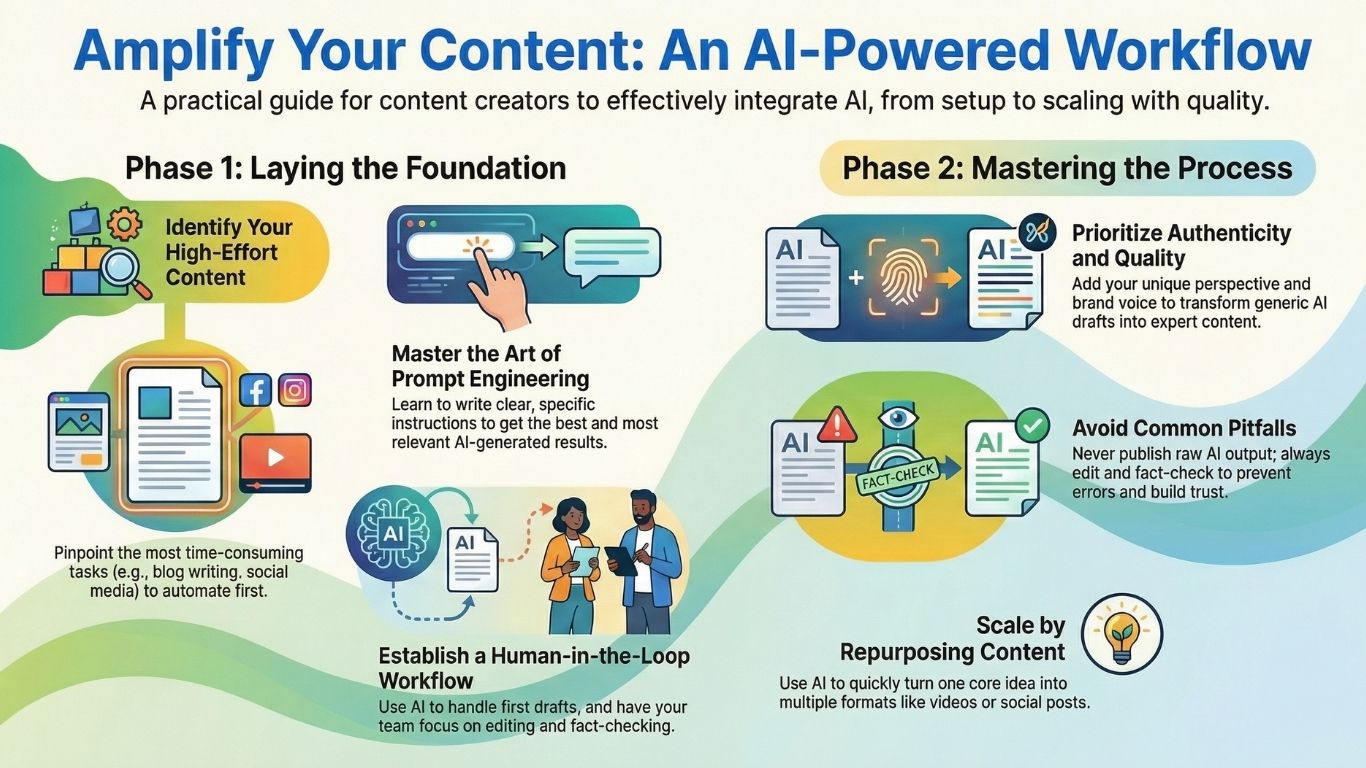
Table of Contents
- What AI Content Creation Really Means
- Types of Content You Can Create with AI
- Getting Started with AI Content Tools
- Building an Effective AI Content Workflow
- Maintaining Quality and Authenticity
- Common Pitfalls to Avoid
- Advanced Strategies for Content Teams
- Scaling Content Production with AI
- Transform Your Content with ArtFly AI
What AI Content Creation Really Means
AI content creation refers to using machine learning algorithms and language models to generate text, images, videos, and other marketing materials based on prompts and parameters you provide. These systems have been trained on vast datasets of existing content, learning patterns, structures, and techniques that make content engaging and effective. The technology goes beyond simple templates or automation, actually understanding context, tone, and intent to produce original work that matches your specifications. Modern AI tools can handle everything from initial brainstorming and outlining to drafting complete articles, designing graphics, and even editing video content. The key distinction is that AI serves as a collaborative partner rather than a replacement, handling repetitive tasks while humans provide strategic direction and creative oversight.
Types of Content You Can Create with AI
Written content represents the most mature application of AI, with tools capable of producing blog posts, social media captions, email newsletters, product descriptions, and ad copy across any industry or niche. Visual content creation has advanced dramatically, allowing you to generate custom images, infographics, social media graphics, and even illustrations from simple text descriptions of what you want. Video content can now be assembled using AI that combines stock footage, generates animated elements, adds voiceovers, and sequences scenes according to your script or storyboard. Audio content including podcasts, voiceovers, and music tracks can be synthesized to match specific voices, emotions, and styles you specify. Even interactive content like quizzes, calculators, and personalized recommendations can be built using AI that adapts to user inputs and behavior patterns.

Getting Started with AI Content Tools
Begin by identifying which content types consume most of your time and would benefit most from automation, whether that's blog writing, social media management, or video production. Research tools specifically designed for your primary content needs rather than trying to find one platform that does everything, as specialized tools typically deliver better results in their focus areas. Start with free trials or freemium versions to test how different AI systems understand your prompts and whether their output style matches your brand voice. Invest time in learning prompt engineering, which is the skill of describing what you want clearly and specifically to get the best results from AI systems. Document what works well in a prompt library you can reference and refine over time, building a knowledge base that makes your AI interactions increasingly efficient.
Building an Effective AI Content Workflow
Establish a clear process where AI handles first drafts and initial ideas while human team members focus on editing, fact-checking, and adding unique insights or personal experiences. Create detailed brand guidelines and style documents that you can reference in your AI prompts to maintain consistency across all generated content. Set up review checkpoints where generated content must pass through human evaluation before publication, ensuring quality standards and catching any errors or off-brand elements. Integrate your AI tools with existing platforms like content management systems, social media schedulers, and project management software to streamline the entire production pipeline. Measure output quality and efficiency metrics regularly, tracking how AI adoption affects your content volume, engagement rates, and team productivity to justify continued investment.

Maintaining Quality and Authenticity
AI-generated content requires human oversight to ensure accuracy, as language models can occasionally produce plausible-sounding information that isn't factually correct or current. Add your unique perspective, experiences, and voice to AI-generated drafts to transform generic content into something distinctive that reflects your brand personality. Use AI for structure and foundation but always inject specific examples, case studies, or data points that demonstrate real expertise in your field. Regularly audit your published content to ensure it maintains the quality standards your audience expects, as rushing AI outputs to publication without review will damage your credibility. Remember that AI tools lack the cultural awareness and emotional intelligence to navigate sensitive topics, so apply extra scrutiny when content touches on complex or controversial subjects.
Common Pitfalls to Avoid
Many creators make the mistake of publishing AI-generated content without any human editing, resulting in generic, impersonal material that fails to engage readers or viewers. Over-reliance on AI for ideation can lead to derivative content that mirrors what already exists rather than bringing fresh perspectives or original thinking to your niche. Neglecting to fact-check AI outputs is particularly dangerous, as these systems can confidently present outdated statistics or invented information that appears credible. Using the same prompts repeatedly without refinement produces formulaic content that becomes predictable and boring, diminishing your brand's unique voice over time. Failing to disclose AI usage when transparency is expected or required can erode audience trust and potentially violate platform policies or regulations in certain industries.

Advanced Strategies for Content Teams
Develop prompt templates for different content types and purposes, creating a standardized approach that any team member can use to generate consistent results. Train AI models on your existing best-performing content to help the system better understand and replicate the style and approach that resonates with your specific audience. Use AI for content personalization at scale, generating variations of the same core message tailored to different audience segments, channels, or stages in the customer journey. Implement AI-powered content analysis tools that evaluate your drafts for SEO optimization, readability scores, sentiment, and competitive positioning before publication. Create feedback loops where you feed performance data back into your AI workflow, using engagement metrics and conversion rates to refine prompts and improve future outputs.
Scaling Content Production with AI
Once your workflow is optimized, systematically increase output by tackling content formats or channels you previously couldn't resource adequately, such as expanding into video or multilingual content. Build content calendars that leverage AI's speed to produce seasonal, trending, or timely material that would be impossible with traditional production timelines. Develop hub-and-spoke content strategies where AI helps you create comprehensive pillar content and then automatically generates related articles, social posts, and supporting materials. Use AI to repurpose existing content across formats, transforming blog posts into video scripts, infographics, podcast outlines, and social media series to maximize the value of each idea. Establish quality control processes that can keep pace with increased volume, possibly using AI-powered editing tools to catch errors and inconsistencies before human review.

Transform Your Content with ArtFly AI
ArtFly AI delivers an integrated platform for creating visual and video content that elevates your marketing materials beyond what text-based AI can achieve alone. Start by uploading product images or creating new visuals using AI image generation, then enhance them by changing backgrounds, adding objects, or adjusting elements to match your campaign vision. Transform static images into engaging video content by adding camera movements, animations, and professional voiceovers generated directly from your script text. The platform's video sequencing tools let you combine multiple scenes into cohesive narratives, perfect for product demonstrations, tutorials, or promotional content that tells a complete story. With integrated music generation and automatic subtitle creation, you can produce polished, platform-ready content that captures attention and drives engagement across all your marketing channels.
Watch Video Tutorial
Related Articles

AI Business Tools: The Ultimate Guide to Boosting Your Productivity in 2026
Discover how AI business tools can revolutionize your workflow and boost productivity. Learn practical tips for automation and marketing.
8 min read
Transform Images Into Videos with AI: Complete Guide
Discover how AI technology turns static photos into dynamic videos instantly, with practical tips for creating stunning video content from your images.
6 min read
The Best AI Tools for Marketing to Boost Your 2026 Campaigns
Discover the top AI tools for marketing that streamline content creation, automation, and strategy. Learn how to boost ROI today.
9 min readReady to Create?
Start using ArtFly AI today and bring your creative vision to life with powerful AI tools.
Get Started Free